Finest Aquatics Livestock
· Leopard | Eel
· Leopard | Eel
Couldn't load pickup availability
Description
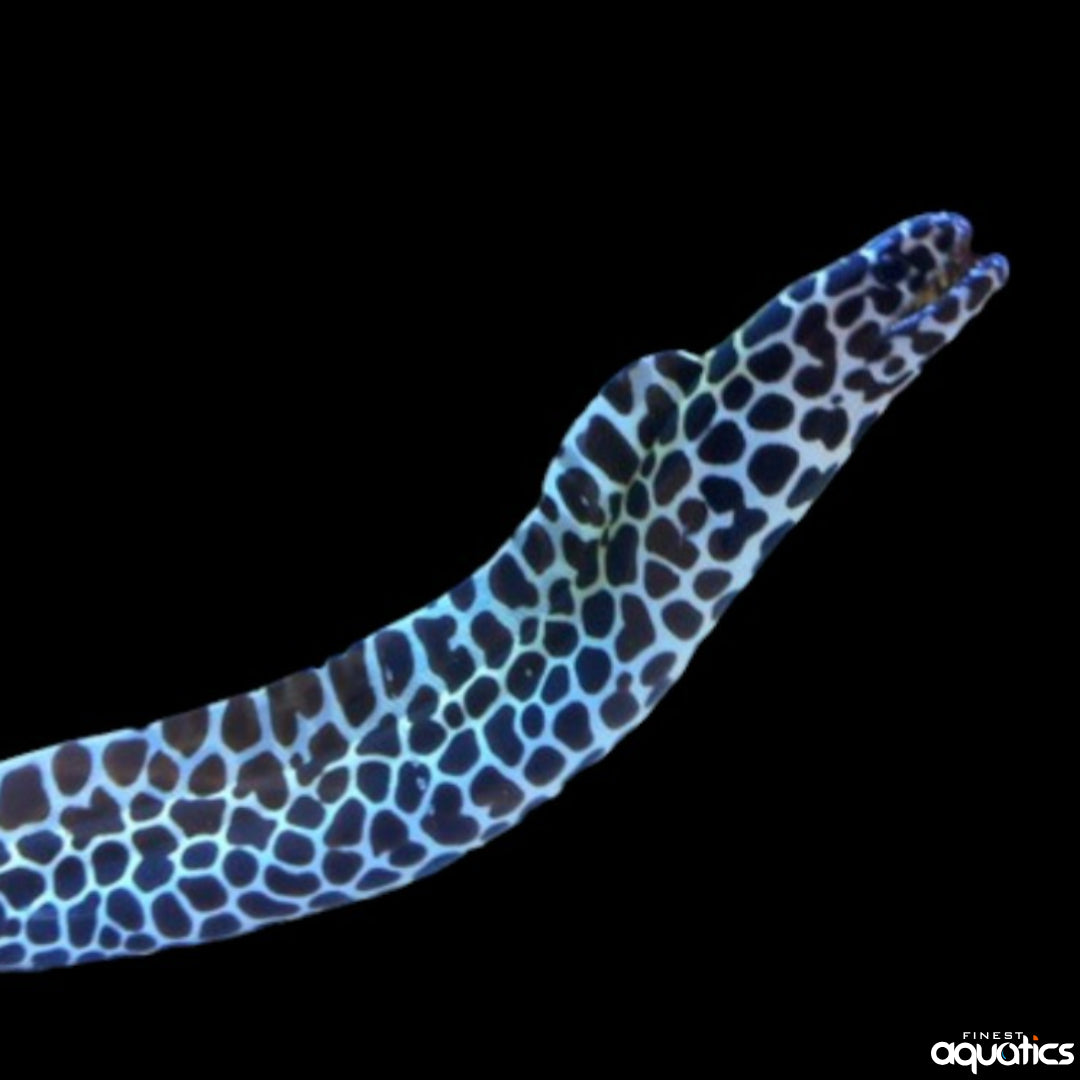
The Leopard Eel features a long, muscular body covered in a pattern of black or dark brown spots on a pale yellow or beige background. Its robust jaws are lined with sharp teeth, adapted for catching fish and cephalopods. Adults can grow up to 3 meters (≈10 feet) in length, making it one of the larger moray eel species.
▪ Leopard Eels are primarily nocturnal ambush predators, spending the day hidden within reef crevices and emerging at night to hunt. Their large size, powerful bite, and striking spotted pattern make them an awe-inspiring presence in natural habitats and large public aquariums.
Aquarium Requirements
• Minimum Tank Size: 1,500–2,000+ litres (400–530+ US gallons)
(Larger recommended for fully grown adults)
Temperature: 24–28 °C (75–82 °F)
pH: 8.1–8.4
Specific Gravity (Salinity): 1.023–1.026
Alkalinity: 8–12 dKH
Ammonia & Nitrite: 0 ppm
Nitrate:< 20 ppm |
Aquascape and Environment:
Provide a massive, secure aquarium with abundant caves, ledges, and rockwork to mimic natural reef crevices. Leopard Eels are expert escape artists and strong swimmers, so a tightly sealed lid is essential. Moderate water flow and high-quality biological filtration are necessary due to their large size and carnivorous diet.
Diet and Feeding
Leopard Eels are carnivorous predators with a preference for fish and cephalopods. They are strong hunters and should be fed a diet that supports their size and protein needs.
Recommended Foods:
Whole or chopped fish
Squid, octopus, or cuttlefish
Shrimp and other meaty marine foods ·
Occasional live prey for natural hunting stimulation —
Feed 3–5 times per week for adults. Avoid overfeeding to prevent water quality issues and obesity.
Temperament and Compatibility
Leopard Eels are highly predatory and should only be housed with robust, large tankmates that cannot be swallowed. They may exhibit aggression toward smaller fish and invertebrates.
Suitable Tankmates:
Large, non-aggressive fish such as groupers, snappers, and large wrasses
◆ Other large morays only in extremely spacious setups with ample hiding areas
Avoid:
Small fish (gobies, clownfish, anthias)
Shrimp, crabs, or small invertebrates
Aggressive or territorial species that may provoke the eel
Reef Compatibility
⚠️ Not Reef Safe
Leopard Eels are not suitable for typical reef aquariums as they will consume small fish, crustaceans, and other invertebrates. — Their size and exploratory nature can also disturb rockwork or fragile coral frags. |
Safe With:
None in conventional reef systems
Use Caution With:
Large corals may be indirectly affected by eels moving rocks or rubble
Additional Information
Maximum Size: Up to 3 meters (≈10 feet)
Lifespan: 20+ years in captivity
Difficulty Level: Advanced (due to size, aggressive nature, and housing requirements)
Natural Behaviour: Crevice-dwelling ambush predator; nocturnal; highly territorial
Origin: Indo-Pacific – Red Sea to Hawaii
Colouration: Pale yellow/beige body with dark, irregular spots resembling a leopard pattern
Summary
The Leopard Eel (Gymnothorax favagineus) is a large, visually dramatic, and highly predatory moray eel species best suited for public aquariums or extremely large private systems. Reef-incompatible and aggressive toward smaller animals, it requires secure, spacious housing, strong filtration, and a diet rich in meaty marine foods. Its nocturnal, crevice-dwelling behavior and striking leopard-like pattern make it a captivating and imposing presence for experienced aquarists. ·
Share