Finest Aquatics Livestock
— Boxfish - Yellow |
— Boxfish - Yellow |
Couldn't load pickup availability
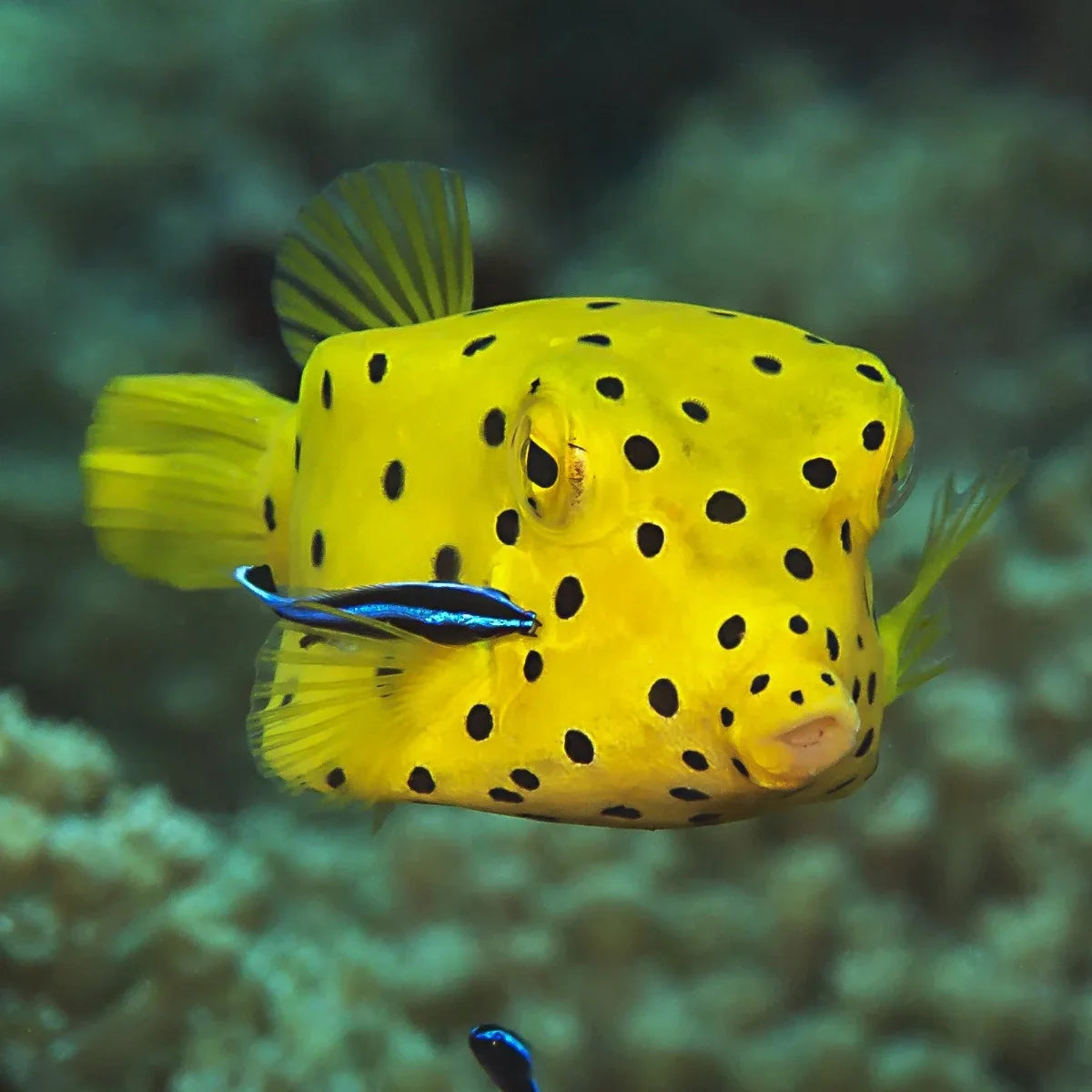
◆ Yellow Boxfish (Ostracion cubicus)
Overview
The Yellow Boxfish (Ostracion cubicus) is a distinctive and eye-catching marine fish known for its bright yellow coloration with small black spots. Native to the Indo-Pacific, including the Red Sea, East Africa, and the Great Barrier Reef, it inhabits coral reefs, lagoons, and sandy areas.
This species is slow-moving, peaceful, and reef-compatible under proper care, making it a unique addition to larger marine and reef aquariums.
Aquarium Requirements
Minimum Tank Size: 125 gallons (475 litres)
Temperature: 24–27°C (75–81°F)
pH: 8.1–8.4 —
Specific Gravity (Salinity): 1.020–1.025
Alkalinity: 8–12 dKH
Ammonia & Nitrite: 0 ppm
Nitrate:< 10 ppm
Aquascape: Provide open swimming areas with live rock for shelter and hiding
Yellow Boxfish require a large, stable aquarium with ample swimming space due to their slow, deliberate movements and active grazing behavior.
Diet and Feeding
Yellow Boxfish are omnivorous and benefit from a varied diet:
High-quality marine pellets or flakes
Frozen foods such as mysis shrimp, brine shrimp, and chopped seafood
Occasional algae-based foods for vegetable matter
‣ Feed small portions 2–3 times daily. Boxfish have small mouths, so food size and frequency are important for proper nutrition.
Temperament and Compatibility
Yellow Boxfish are generally peaceful and slow-moving. They can coexist with other non-aggressive species but should be monitored as adults can release a toxic substance when stressed.
Tankmate Recommendations:
Suitable: Non-aggressive reef fish such as tangs, gobies, and anthias
Avoid: Aggressive or fin-nipping species
Stress should be minimized with stable water conditions, adequate space, and gentle handling.
Reef Compatibility ·
⚠ Caution – Potentially Reef Safe
While Yellow Boxfish generally coexist with corals and invertebrates, they can release a toxin (ostracitoxin) when stressed or threatened, which may harm other tank inhabitants. Careful monitoring and quarantine are recommended.
Additional Information
Maximum Size: Up to 45 cm (18 inches) in the wild; smaller in aquaria
Lifespan: 10+ years with proper care
Difficulty Level: Moderate to Advanced
Natural Behavior: Slow-moving, peaceful, grazers on algae and small invertebrates
Origin: Indo-Pacific reefs, including the Red Sea, East Africa, and the Great Barrier Reef
Share